

Every buyer asks some version of the same question in the first five minutes of a consultation: “How much do I actually need saved up?” The honest answer is that it depends less on a magic percentage and more on which loan program fits your situation — and in the East Bay, that math looks different city to city.
Here’s the number-driven version, without the fluff.
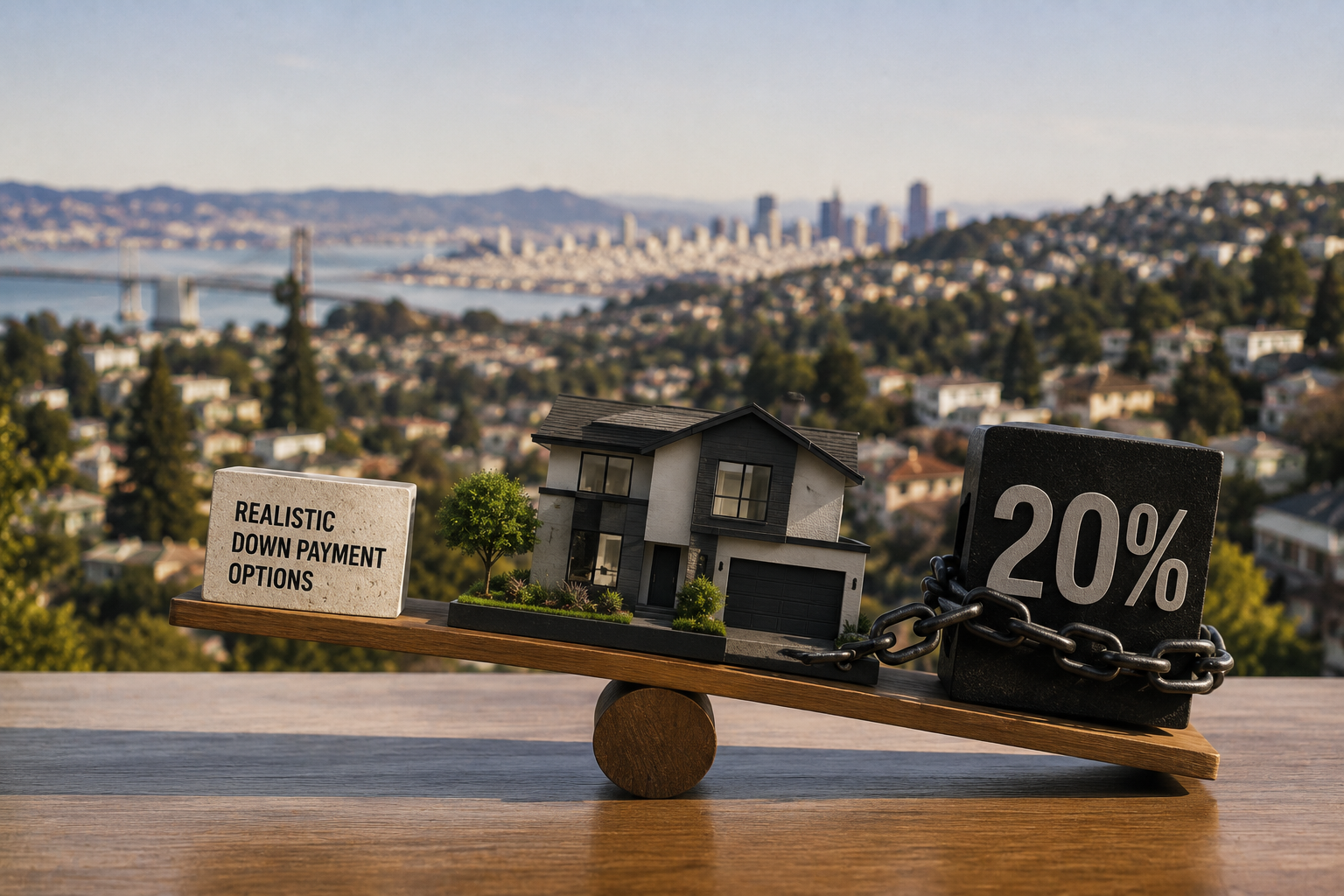
The 20% Number Is Mostly a Myth
Twenty percent down gets repeated so often that people treat it as a requirement. It isn’t. It’s the threshold where you avoid private mortgage insurance (PMI) on a conventional loan — that’s it. Plenty of well-qualified buyers put down less and make up the difference with a stronger offer strategy or a slightly higher monthly payment.
What 20% actually buys you:
- No PMI, which typically runs 0.5%–1.5% of the loan amount annually
- A lower monthly payment
- More negotiating room in a competitive offer, since sellers read a larger down payment as a signal of buyer strength
What it doesn’t buy you: a guaranteed win. A clean, well-structured offer with 10% down often beats a shaky 20%-down offer dragging a dozen contingencies behind it.
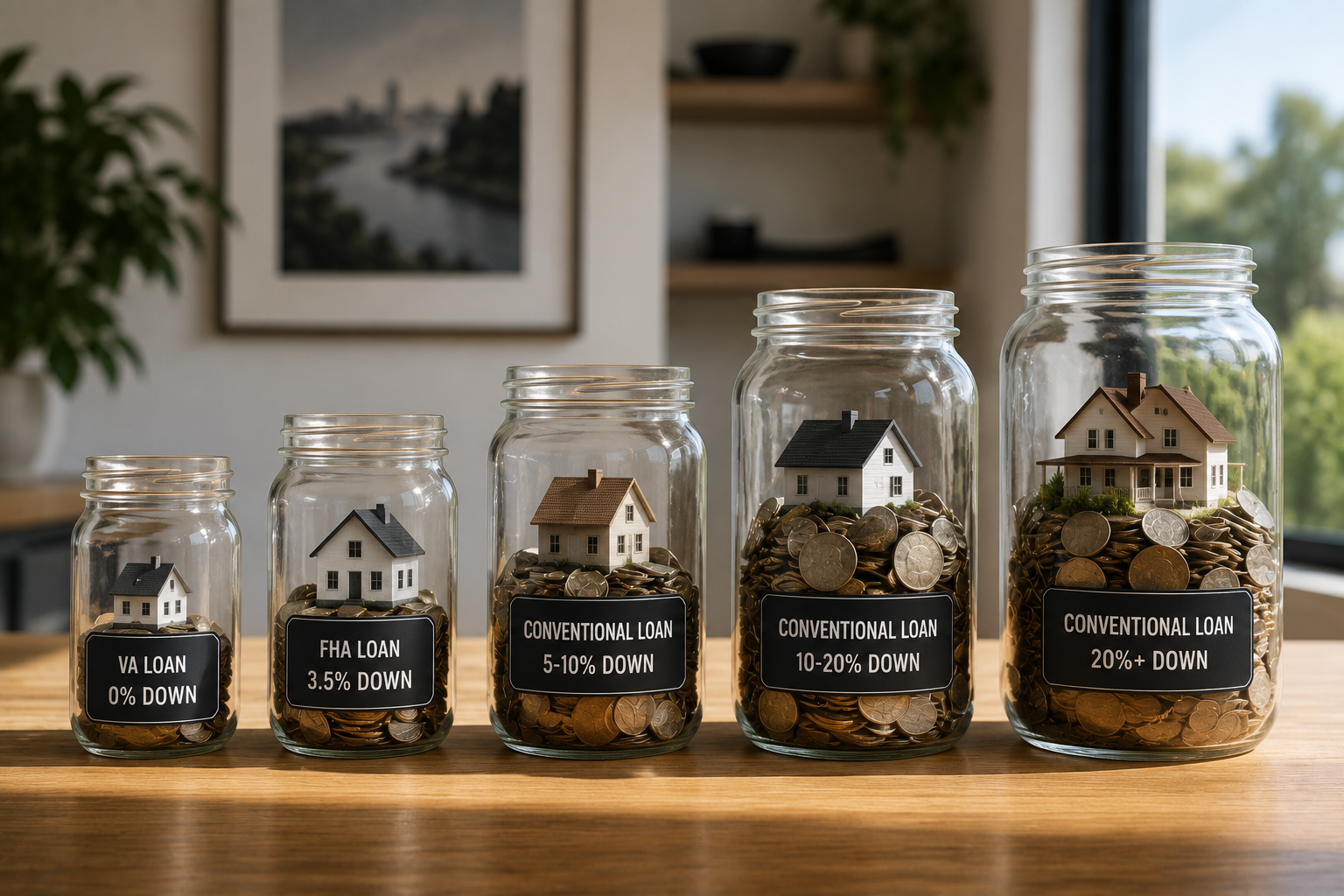
What Down Payments Actually Look Like by Loan Type
| Loan Type | Typical Minimum Down | Notes |
| Conventional | 3–5% | PMI required below 20% down |
| FHA | 3.5% | Mortgage insurance for the life of the loan in most cases |
| VA | 0% | For eligible veterans and service members |
| Jumbo | 10–20% | Most East Bay purchases above ~$1.2M fall here |
That last row matters more here than almost anywhere else in the country. In Oakland and Berkeley, a huge share of purchases cross the jumbo threshold, which changes both the down payment math and the underwriting timeline.

Why the Number Changes by Neighborhood — and What Actually Drives That
It’s tempting to map “down payment needed” onto a neighborhood list, but that’s the wrong lens. What actually drives the math is price point, and price point swings hard across the East Bay — sometimes by seven figures within a few miles of each other. A Rockridge or Elmwood purchase is very likely landing you in jumbo territory, needing 10–20% down. A purchase a few neighborhoods over, at a meaningfully lower price point, may sit comfortably within conventional or even FHA limits.
The practical takeaway: get pre-approved before you fall in love with a neighborhood. The loan program that fits your savings should help narrow your search — not the other way around.
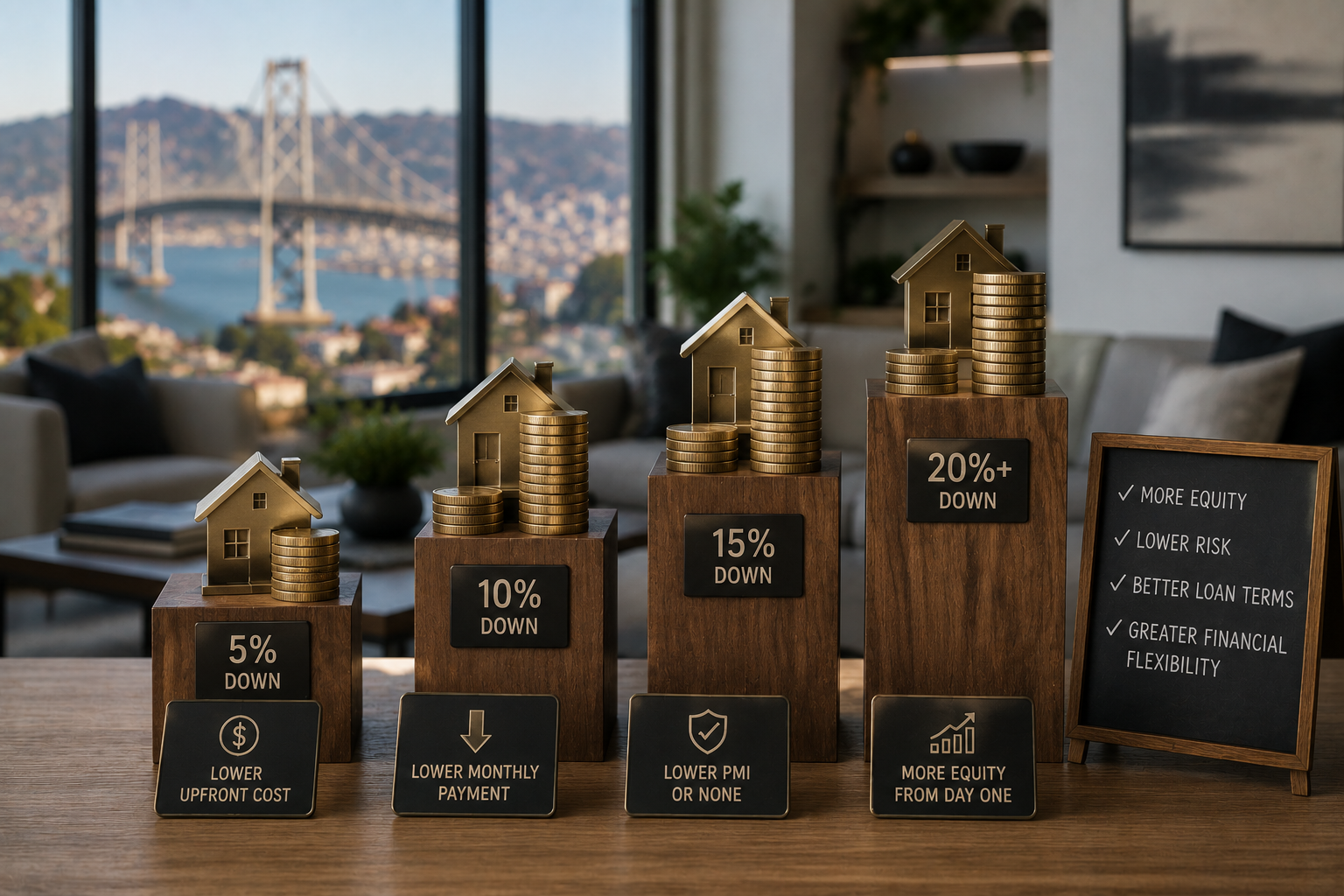
When Buyers Put Down More Than 20% — What That Actually Changes
Plenty of our clients aren’t scraping to hit 20% — they’re putting down 25%, 35%, sometimes 50%+. That’s not just a stronger offer on paper. It changes the mechanics in ways worth understanding before you decide how much cash to bring to the table:
- Appraisal gap coverage becomes real leverage. In multiple-offer situations, a buyer who can say “we’ll cover a $150K appraisal shortfall” is functionally competing with an all-cash buyer. This is often the actual reason a seller picks one offer over another — not the down payment percentage itself, but the flexibility it signals. If the property doesn’t appraise at contract price, a buyer with 35% down can restructure — drop to 25% down, use that difference to cover the gap — without the deal falling apart.
- You may drop out of jumbo entirely. Push your down payment up and your loan amount down, and you can land back under the conforming loan limit. That changes your rate, your underwriting timeline, and sometimes even which lenders are competitive for you.
- PMI disappears and rate pricing improves. Below 80% LTV on a conventional loan, no PMI. Depending on the lender, crossing certain LTV tiers below that also improves your rate pricing further — real, monthly, felt savings.
- Underwriting gets easier, not just cheaper. A smaller loan relative to the purchase price generally means less scrutiny on debt-to-income ratios and a smoother approval process overall.
- The trade-off: liquidity. None of this is free. Every dollar you put into the down payment is a dollar not invested elsewhere, and with rates where they’ve been, that opportunity cost is real. The right move isn’t “put down as much as possible” — it’s understanding what each additional dollar of down payment is actually buying you, and deciding if that’s the best use of it.

The Down Payment Assistance Programs Worth Knowing About
A few programs specifically help East Bay buyers close the gap:
- CalHFA programs — down payment and closing cost assistance for California buyers who meet income limits
- MyHome Assistance Program — a deferred-payment junior loan that can be combined with CalHFA first mortgages
- City of Oakland first-time homebuyer programs — periodically available; funding and eligibility shift, so check current status before counting on it
- Employer-based programs — some Bay Area employers, particularly in healthcare and education, offer homebuyer grants worth checking before you assume you’re on your own
None of these are guaranteed fits, and eligibility rules change. The point is that “I don’t have 20% saved” is not the same as “I can’t buy right now” — there are more paths than most buyers assume.
Rather than fixating on a percentage, run the numbers three ways before you set a savings target:
- Minimum down payment scenario — What does the monthly payment look like at 3–5% down, PMI included?
- 20% down scenario — What does the same home cost monthly without PMI, and how much longer would it take to save that amount?
- Middle-ground scenario — Often 10–15% down strikes the best balance between competitive offer strength and time-to-purchase.
Run all three against your actual budget, not a rule of thumb you saw online. The right down payment is the one that lets you close comfortably and still sleep at night.
FAQs
Do I need 20% down to buy in Oakland or Berkeley?
No. Conventional loans allow as little as 3–5% down, FHA allows 3.5%, and VA loans allow 0% for eligible buyers. Twenty percent avoids PMI but isn’t required to purchase.
What’s considered a jumbo loan in the East Bay?
Loan limits are set annually and vary by county. Given East Bay pricing, many Oakland and Berkeley purchases — especially above roughly $1.2M — fall into jumbo territory, which typically requires a larger down payment than conforming loans.
Is a smaller down payment a disadvantage in a competitive offer?
It can be, but it’s not automatic. Sellers weigh the whole offer — financing type, contingencies, timeline, and lender strength — not just the down payment percentage.
Does putting down significantly more than 20% actually help in a bidding war?
Often, yes — but not for the reason people assume. It’s less about the number itself and more about the flexibility it buys, particularly the ability to cover an appraisal gap if the home doesn’t appraise at contract price.
Are there down payment assistance programs specific to Oakland or Berkeley?
Yes, though availability shifts. CalHFA state programs and periodic City of Oakland programs are worth checking early in your search, alongside any employer-based homebuyer benefits.

Yohay Davidson Group Mike Yohay & Jeremy Davidson REALTORS® DRE 02080767 | DRE 02085874 [email protected] M: 510-800-7449